Save

A university project designing a coordination platform for stray cat care — from an ambiguous social problem to a working product concept.

Save

A university project designing a coordination platform for stray cat care — from an ambiguous social problem to a working product concept.

Overview

SAVE started with a problem that has no product brief: stray cats die prematurely because care — food, shelter, medical help — reaches them randomly, if at all. This was a university project, and my first experience of taking a raw, ambiguous problem and shaping it into a product from zero: research, problem definition, scoping, and UI.

Role

Product Designer -

University Project

Time

2022

The Problem

The Problem

The Problem

The research surfaced something counterintuitive: the bottleneck isn't willingness. A municipal survey from Esenler — one of Istanbul's densest districts — showed people broadly support helping street animals and many claim they already do. Cats still die early: indoor cats live 10–15 years; street cats far less, driven by three causes — lack of medical care, weather, and external threats like traffic. So the real problem is coordination: help exists, but it's scattered, anonymous, and leaves no trace. A cat fed by five people has no record with any of them.

Throughout the project, I aimed for success by following "Design Thinking: a Non-Linear Process" principles.

Throughout the project, I aimed for success by following "Design Thinking:

a Non-Linear Process" principles.

Esenler municipality conducted a survey (one of the most crowded places in Istanbul).

A municipal survey from Esenler: willingness to help is widespread — the missing piece is a channel.

Indoor cats live 10–15 years; street cats far less. Three causes: no medical care, weather, external threats.

Scope

Scope

Scope

I deliberately limited the concept to cats. Dogs and other stray animals share the problem but differ in behavior, risk, and care patterns — designing for all of them at once would produce a generic product that serves none well. Cats-only kept the concept testable; the structure was designed to extend later.

I deliberately limited the concept to cats. Dogs and other stray animals share the problem but differ in behavior, risk, and care patterns — designing for all of them at once would produce a generic product that serves none well. Cats-only kept the concept testable; the structure was designed to extend later.

I deliberately limited the concept to cats. Dogs and other stray animals share the problem but differ in behavior, risk, and care patterns — designing for all of them at once would produce a generic product that serves none well. Cats-only kept the concept testable; the structure was designed to extend later.

I deliberately limited the concept to cats. Dogs and other stray animals share the problem but differ in behavior, risk, and care patterns — designing for all of them at once would produce a generic product that serves none well. Cats-only kept the concept testable; the structure was designed to extend later.

Research

Research

Research

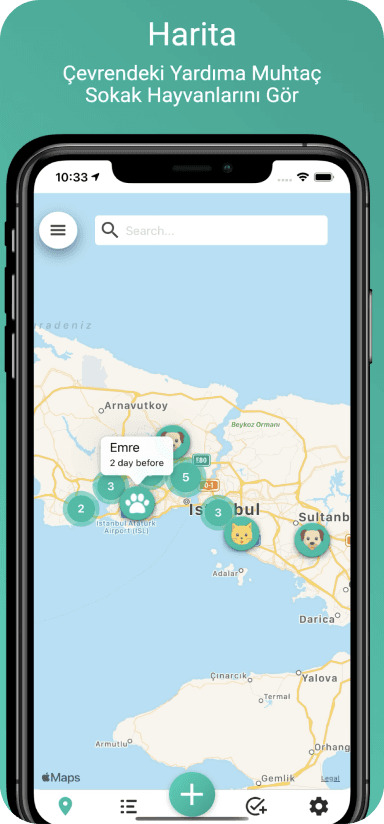
The problem itself came from conversations. Talking with people around me about street animals, the same pattern kept surfacing: everyone had a cat they "sort of" looked after — fed sometimes, worried about, lost track of. Nobody owned the problem, so nobody owned the cat. Those informal conversations gave me the framing; two tracks of secondary research gave me the evidence: cause research (mortality data and the three causes above) and a benchmark of existing apps with sheltering, feeding, location-tracking, and rapid-action features.

The problem itself came from conversations. Talking with people around me about street animals, the same pattern kept surfacing: everyone had a cat they "sort of" looked after — fed sometimes, worried about, lost track of. Nobody owned the problem, so nobody owned the cat. Those informal conversations gave me the framing; two tracks of secondary research gave me the evidence: cause research (mortality data and the three causes above) and a benchmark of existing apps with sheltering, feeding, location-tracking, and rapid-action features.

The problem itself came from conversations. Talking with people around me about street animals, the same pattern kept surfacing: everyone had a cat they "sort of" looked after — fed sometimes, worried about, lost track of. Nobody owned the problem, so nobody owned the cat. Those informal conversations gave me the framing; two tracks of secondary research gave me the evidence: cause research (mortality data and the three causes above) and a benchmark of existing apps with sheltering, feeding, location-tracking, and rapid-action features.

The problem itself came from conversations. Talking with people around me about street animals, the same pattern kept surfacing: everyone had a cat they "sort of" looked after — fed sometimes, worried about, lost track of. Nobody owned the problem, so nobody owned the cat. Those informal conversations gave me the framing; two tracks of secondary research gave me the evidence: cause research (mortality data and the three causes above) and a benchmark of existing apps with sheltering, feeding, location-tracking, and rapid-action features.

Bee Animal

Bee Animal

Helpimal

Helpimal

MamaPoint

MamaPoint

Mutu Patiler

Mutu Patiler

Semtpati

Semtpati

Shazam

Shazam

The benchmark's takeaway: existing products treat helping as a one-off event — report a cat, donate, move on. None of them created continuity: no shared memory of which cat was vaccinated, fed, or needs follow-up. That gap became the product's core.
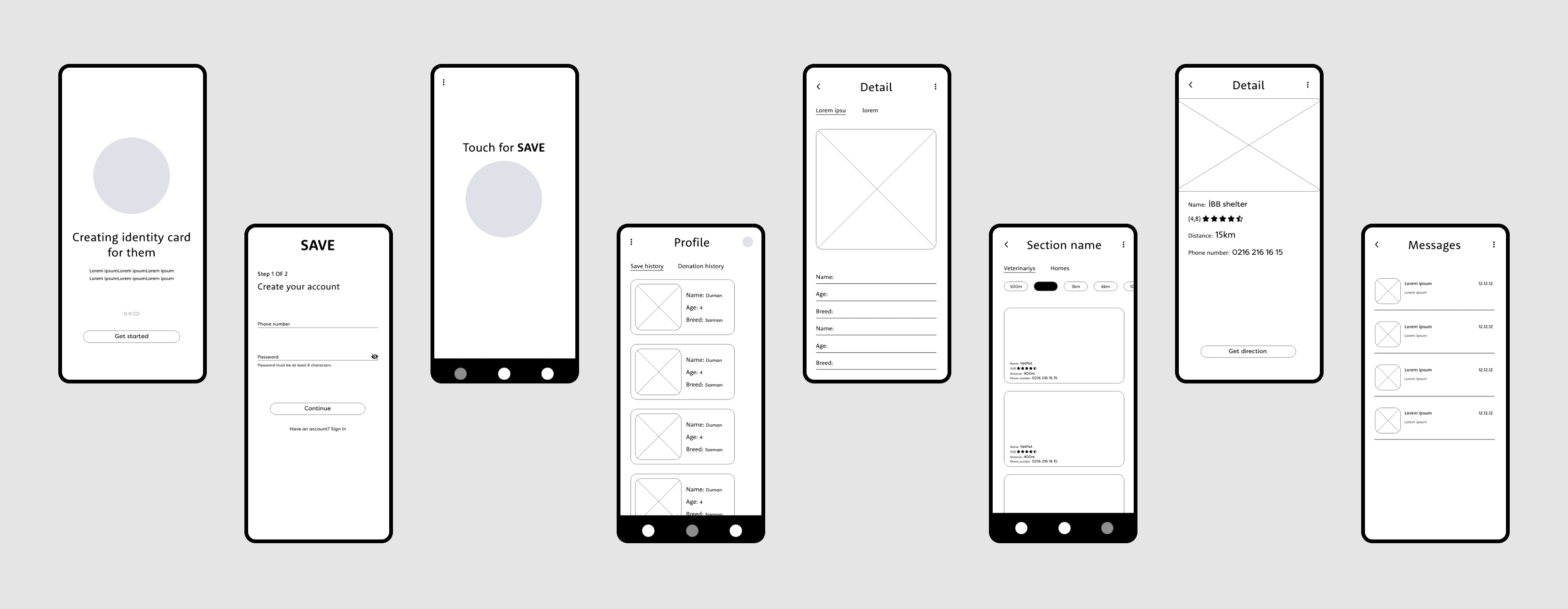
From wireframe to decisions: the structure was set before the visual language.

Design Decisions

Design Decisions

1. An identity card for every cat

The central mechanic: each cat gets a profile with photo, location, and health history. This turns strangers' individual acts of kindness into cumulative care — the vet who vaccinates, the neighbor who feeds, and the adopter who searches are all writing to and reading from the same record. For a being with no owner, the record is the owner.

The cat's record: identity on one tab, health history on the other — a shared source of truth anyone can act on.

2. Location-first structure

Stray care is inherently local; nobody travels across the city to feed a cat. The app is organized around the map, not a feed: what's near you, what needs help near you.
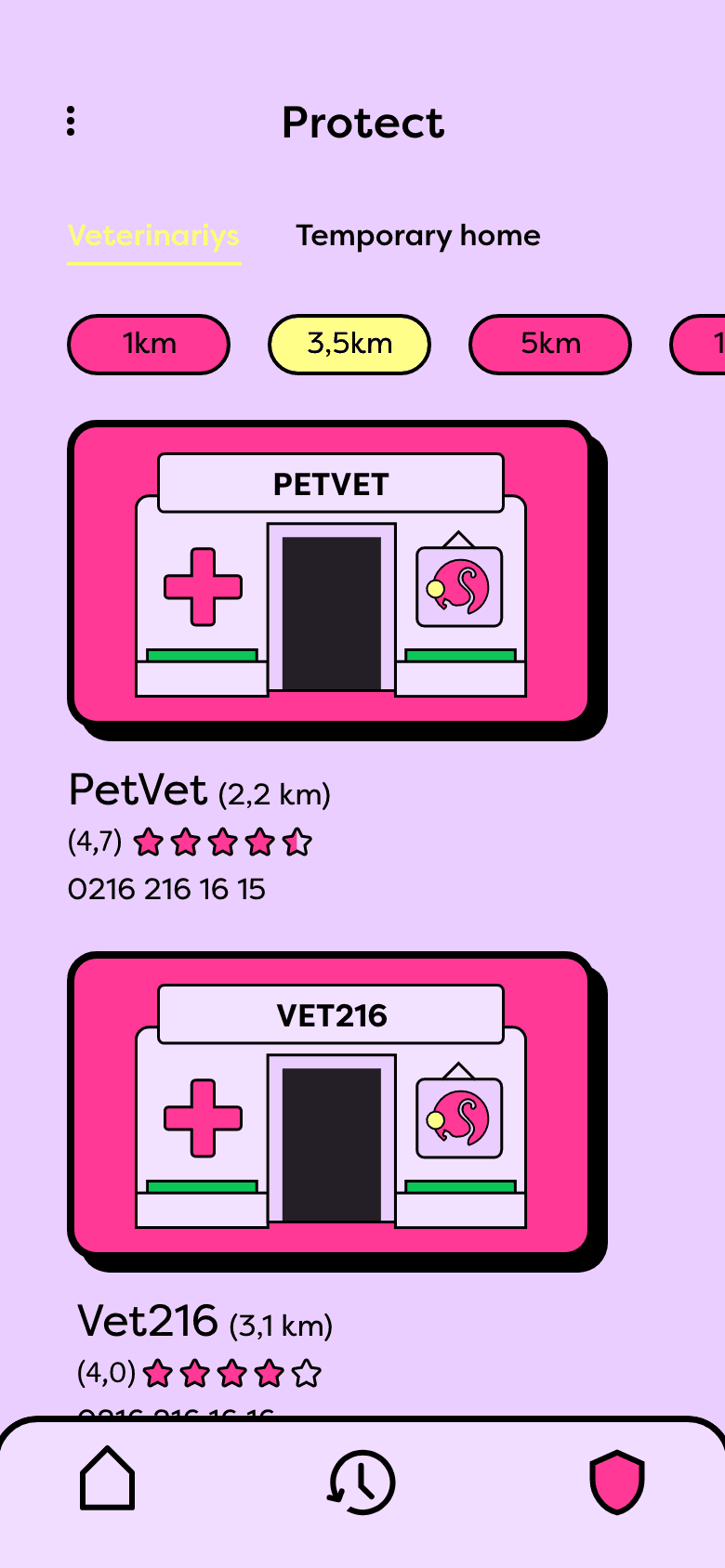
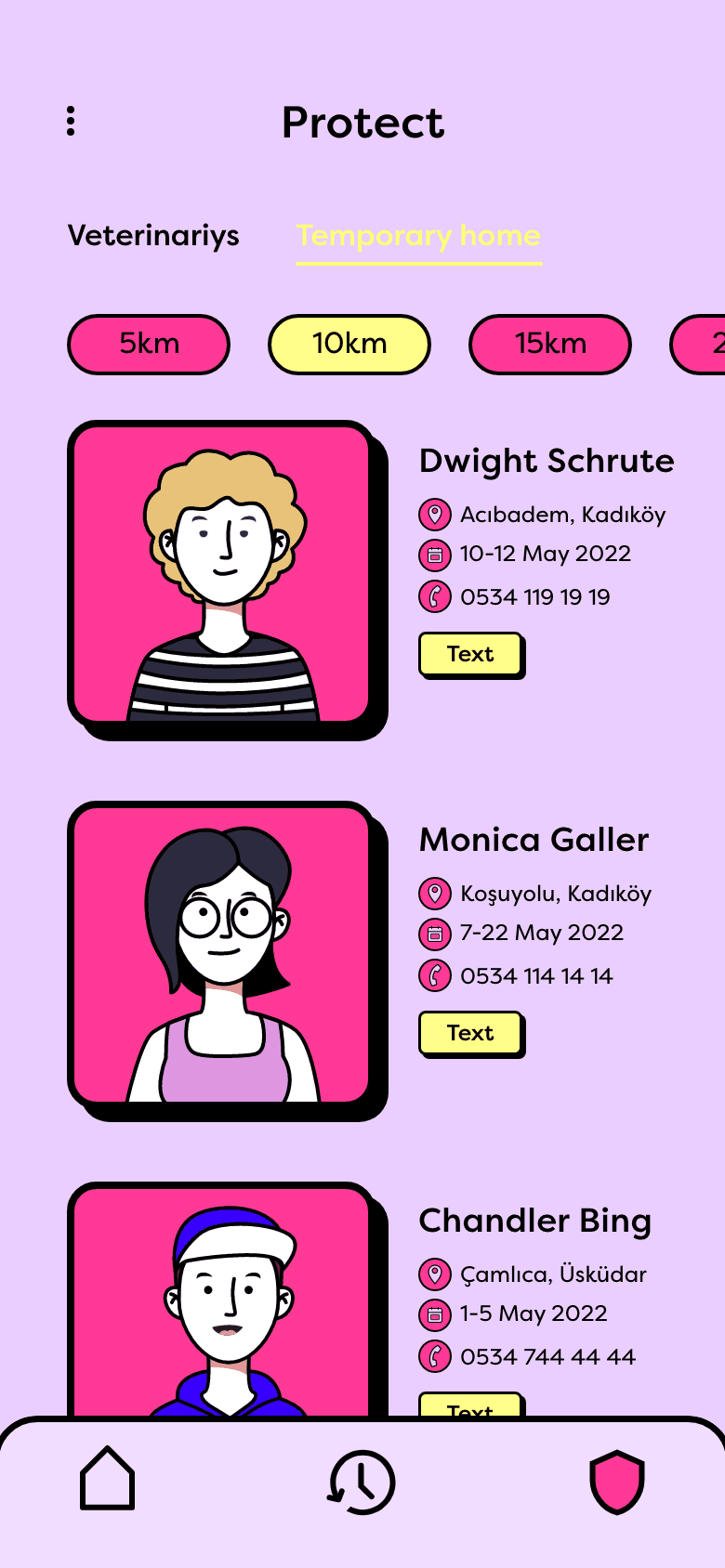
Distance is the primary filter: vets and temporary homes surfaced by how far they are from you.

3. Adoption as the outcome, not a separate app

Adoption listings work best when they carry history. A cat with a visible health record and a known caretaker community is a lower-risk, higher-trust adoption than a photo with a phone number.

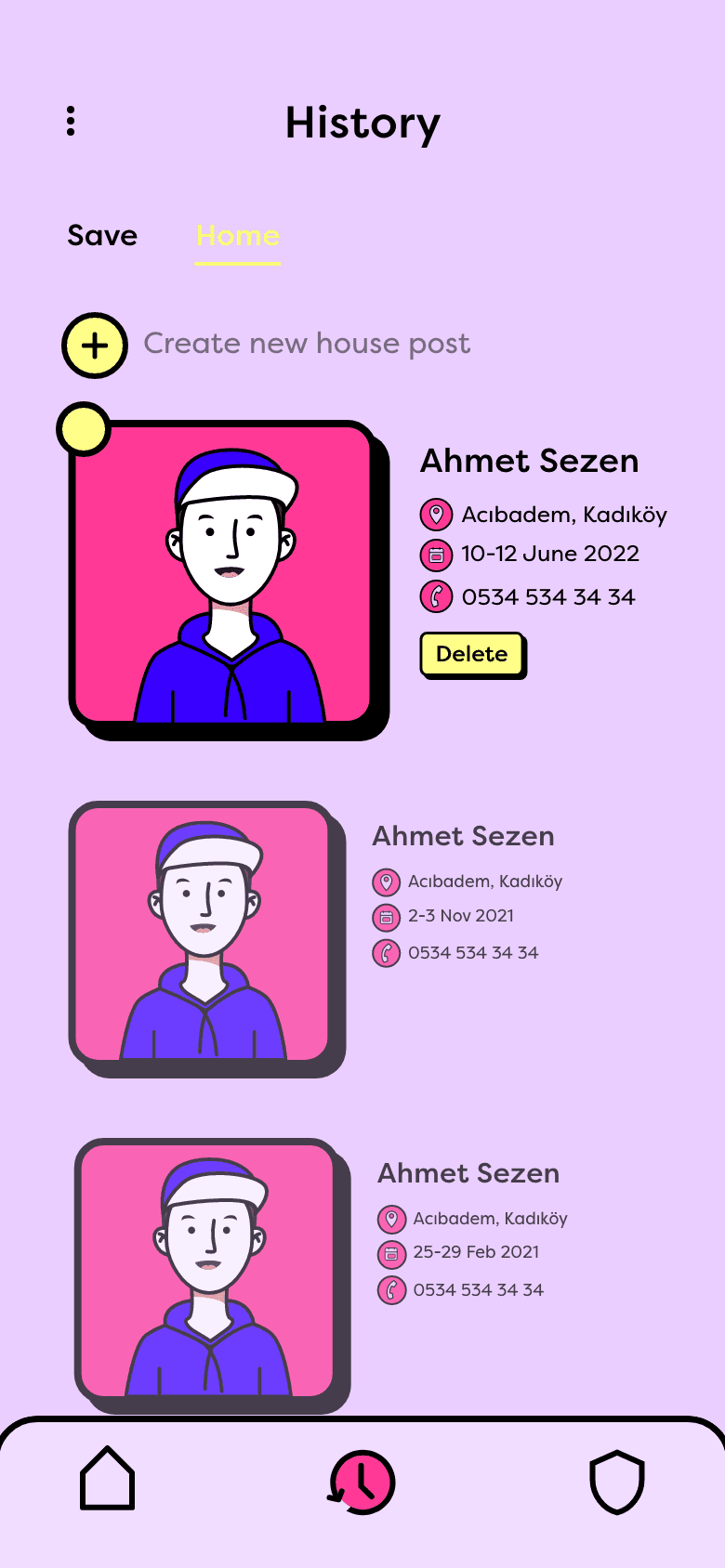
Both sides of adoption: cats with visible records, and people offering temporary homes nearby.

Final Screens

Final Screens

Final Screens

The surrounding flows: onboarding, creating a record with the camera, and coordinating through messages.

What I'd Do Differently Today

What I'd Do Differently Today

What I'd Do Differently Today

I'd structure the discovery. The informal conversations that surfaced the problem were the right instinct, but I'd turn them into planned interviews with the people who actually sustain street cats — regular feeders, vets, shelter volunteers — with notes, patterns, and quotes I could design against, instead of impressions I carried in my head.

I'd structure the discovery. The informal conversations that surfaced the problem were the right instinct, but I'd turn them into planned interviews with the people who actually sustain street cats — regular feeders, vets, shelter volunteers — with notes, patterns, and quotes I could design against, instead of impressions I carried in my head.

I'd run usability tests on the core loop (find cat → read record → act → update record) before polishing any UI. As a student I validated with instinct; today I'd validate with tasks.

I'd run usability tests on the core loop (find cat → read record → act → update record) before polishing any UI. As a student I validated with instinct; today I'd validate with tasks.

I'd define what success means: sustained records per cat, repeat caregivers, adoption follow-through — and design the product's screens around moving those numbers, not around feature completeness.

I'd define what success means: sustained records per cat, repeat caregivers, adoption follow-through — and design the product's screens around moving those numbers, not around feature completeness.

Get in Touch 🤙

Get in Touch 🤙

Get in Touch 🤙

Get in Touch 🤙

ahmetssezen1@gmail.com

ahmetssezen1@gmail.com

ahmetssezen1@gmail.com

ahmetssezen1@gmail.com

Create a free website with Framer, the website builder loved by startups, designers and agencies.